The complete Budapest locations guide.
The complete guide to filming locations in Budapest: Parliament, Chain Bridge, Buda Castle, Andrássy, grand cafés, baths, the metro and Roman ruins — with what each doubles for and the genre it serves.
Budapest earns its nickname as the chameleon of European cinema. This is the working producer's guide to its signature locations — what they look like, what they double for, and the kind of film each one serves.
The Danube waterfront
The establishing shot of a European capital. The Parliament lit from the water at night is pure historical epic and thriller; the Chain Bridge is action and chase; the embankments and river traffic play romance and adventure. Almost no dressing required.
Buda Castle & the Old Town
Cobbled royal quarter, baroque courtyards and Fisherman's Bastion turrets — fantasy and period drama. The hill also gives you the Citadel panorama for aerials, reveals and sci-fi skylines.
Pest boulevards: Andrássy & beyond
Haussmann-style avenues, wrought-iron balconies and grand facades that double for Paris and Vienna. Ideal for period, romance and prestige drama, and for any "European city" a script needs without naming it.
Interiors: cafés, baths, opera, metro
The grand cafés (like the New York Café) are drama and romance ready-dressed; the thermal baths bring an unmistakable texture; the State Opera reads as Vienna or Paris; and Europe's oldest metro line and its stations serve thrillers and period pieces. These interiors save you enormous build cost.
Synagogues & sacred interiors
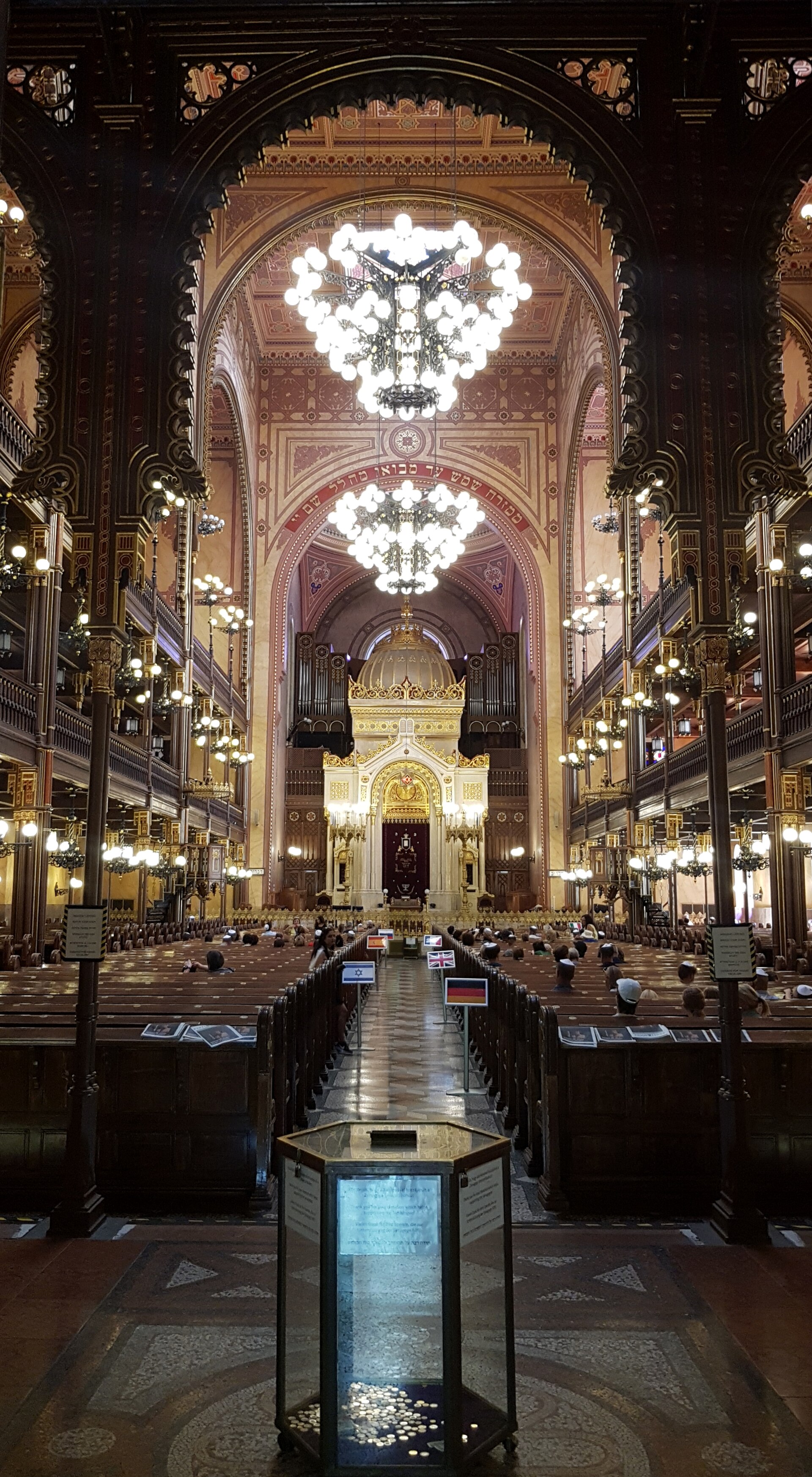
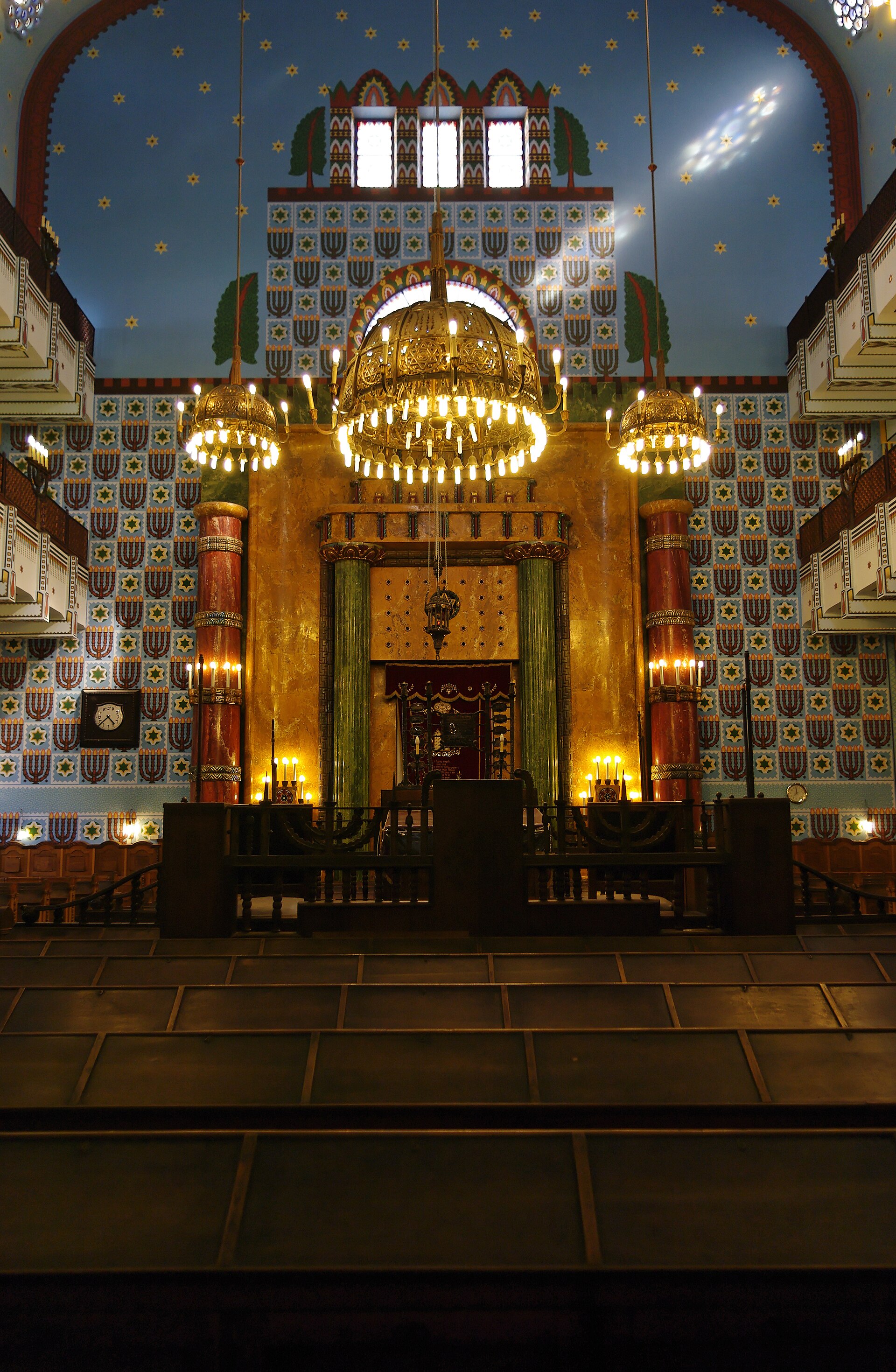
The Dohány Street Synagogue offers one of Europe's grandest Moorish Revival interiors, with a long ceremonial nave suited to period drama, historical narratives and major crowd scenes. The Kazinczy Street Synagogue is more intimate, with Art Nouveau detailing and stained glass that give the Jewish Quarter a distinct turn-of-the-century visual language. St. Stephen's Basilica and Matthias Church add monumental Neoclassical and richly painted Neo-Gothic alternatives.
Churches & cathedral interiors
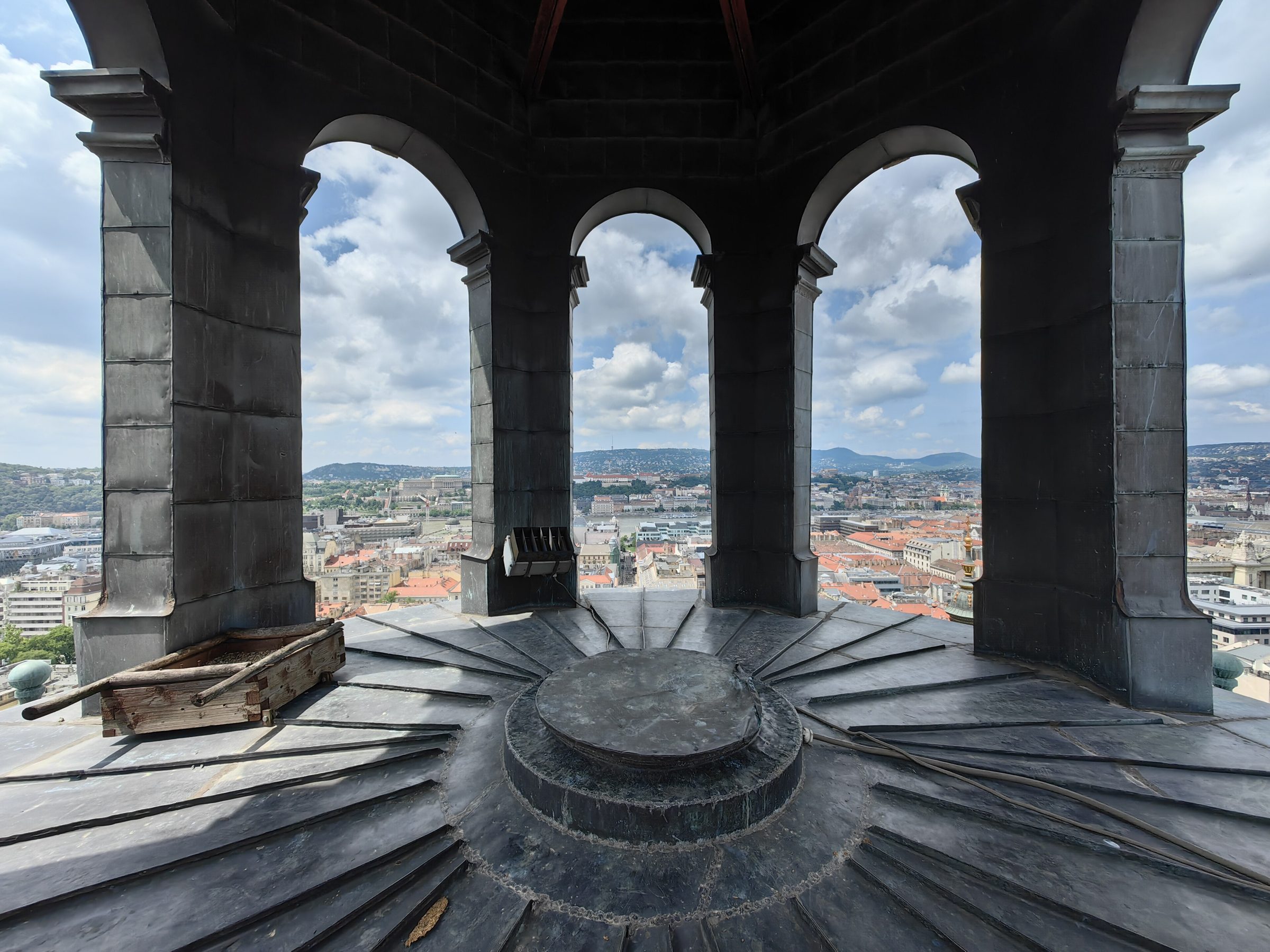
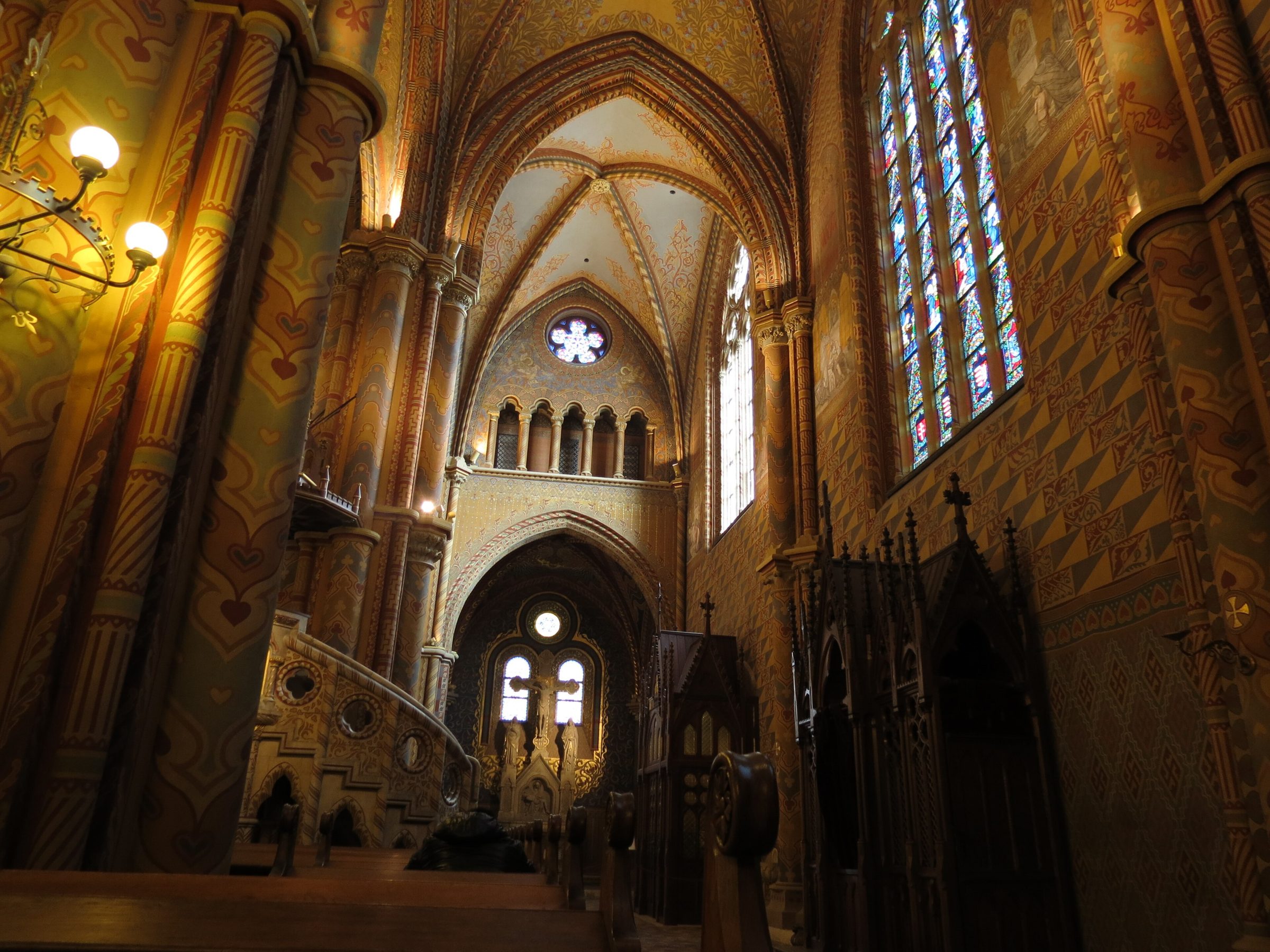
St. Stephen's Basilica gives you a 96-metre dome, marble colonnades and a nave scaled for coronations, state funerals and cathedral-set thrillers. Matthias Church is the opposite register: dense Zsolnay-tiled Neo-Gothic surfaces, painted walls and stained glass that read as medieval Europe on camera with almost no dressing. Outside the capital, Pécs Cathedral, Győr's Basilica, the Great Reformed Church in Debrecen and the twin-towered Votive Church in Szeged extend the same palette — see the regional guide.
Roman & ancient
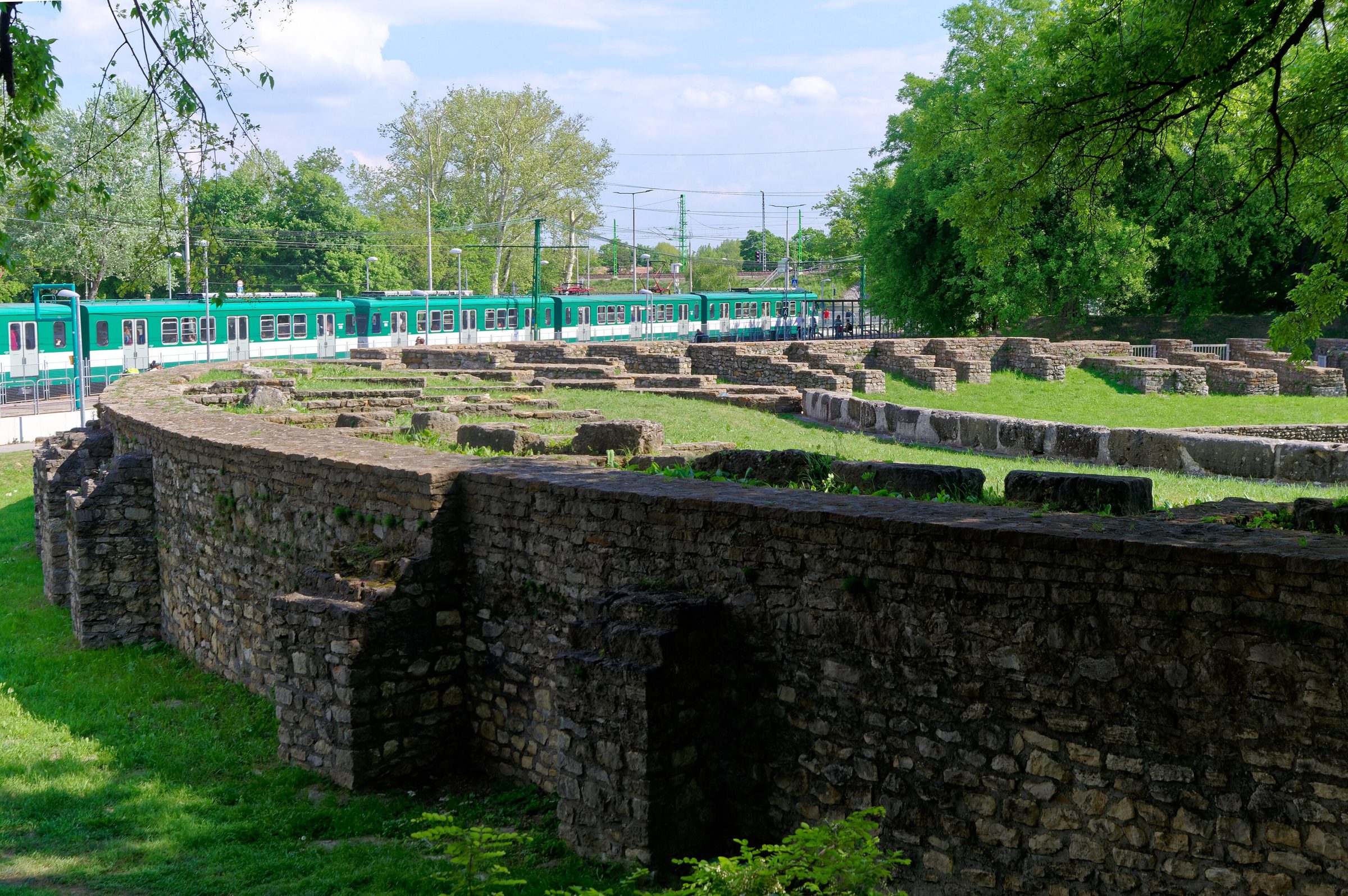
Budapest has two genuine standing Roman amphitheatres, not just scattered ruins. The civil amphitheatre at Aquincum (III. district, Szentendrei út) retains its elliptical arena wall, entrance vaults and seating tiers — an arena you can actually block action inside. The larger Military Amphitheatre (Nagyszombat utca, III. district) was built around AD 145 for roughly 10,000–13,000 spectators, and its arena floor and perimeter walls survive within the modern city block. Together with the Aquincum museum ruin field and reconstructed Roman house, they cover antiquity, sword-and-sandal and myth — a look most European capitals cannot provide inside city limits.
The edges: islands, rail, housing
Margaret Island for water and adventure; Nyugati station's iron-and-glass hall and rural single tracks for period, war and thriller; and housing from Haussmann apartments to socialist-era blocks to suburban villas for crime and family drama.
In Budapest the location often is the production design. That is what makes it fast, cinematic and cheap at once.
Beyond the city
An hour or two out, the range explodes — palaces, castles, plains, lakes and villages that double for rural America. See the regional guide and the full genre-tagged library. When you are ready, we scout, permit and run the units — director-to-director.
Questions producers ask us
What can you film in Budapest?
What does Budapest double for on screen?
Do Budapest locations need much set dressing?
Related insights
Bring your production to Hungary.
Tell us the budget and territory. We'll model the rebate and plan the floor — and we can arrange to monetize the rebate upfront.
Model Your Rebate